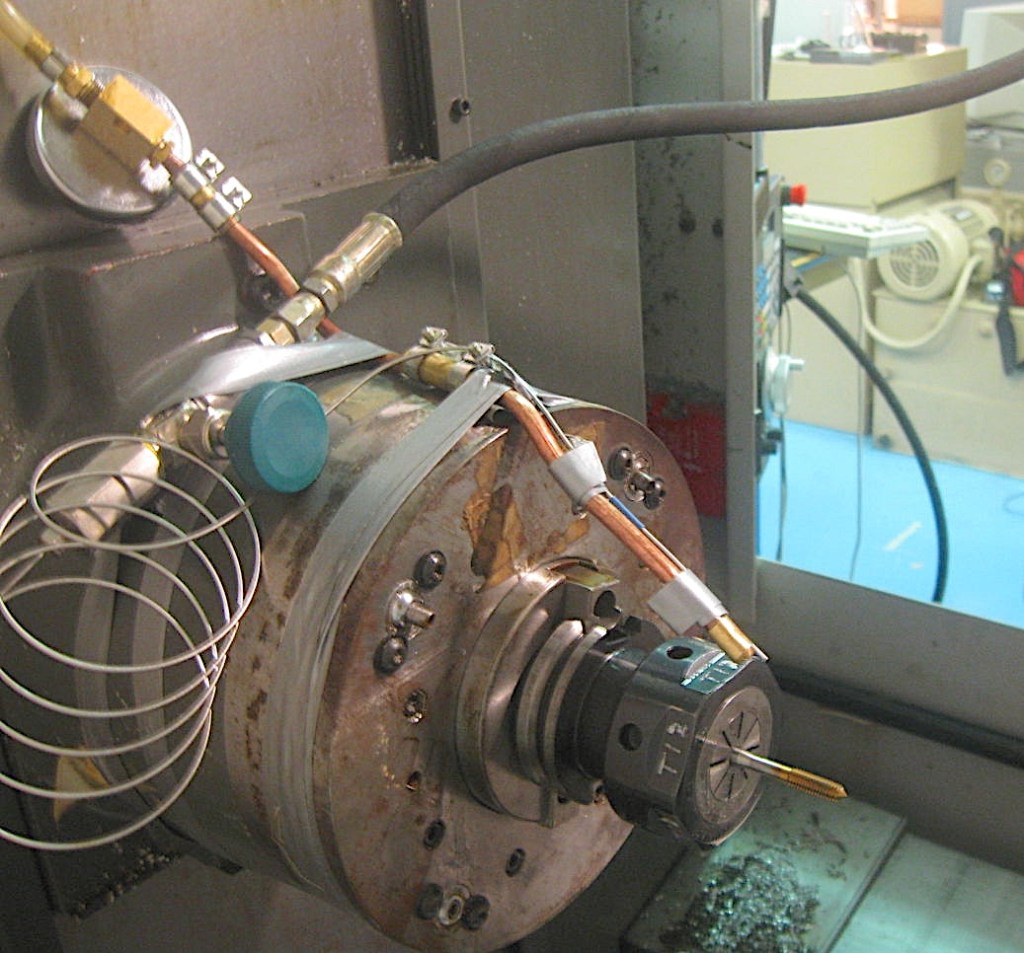
Welcome. This issue’s cover shows a tapping torque test setup in one of the manufacturing labs at the University of Michigan, from the brief and ridiculous period when I was employed there as a “Research Scientist” in the Mechanical Engineering Department. I shit you not. My wife, who’s an actual, bona fide scientist, was amused by this wannabe title. I would rather have been called an engineer, but I needed the paycheck, and the money was still green, except for the clinking coins. As a Research Scientist I was part of the research faculty, supported on grants and not part of the instructional, tenure-track system. I was a fish out of water there.
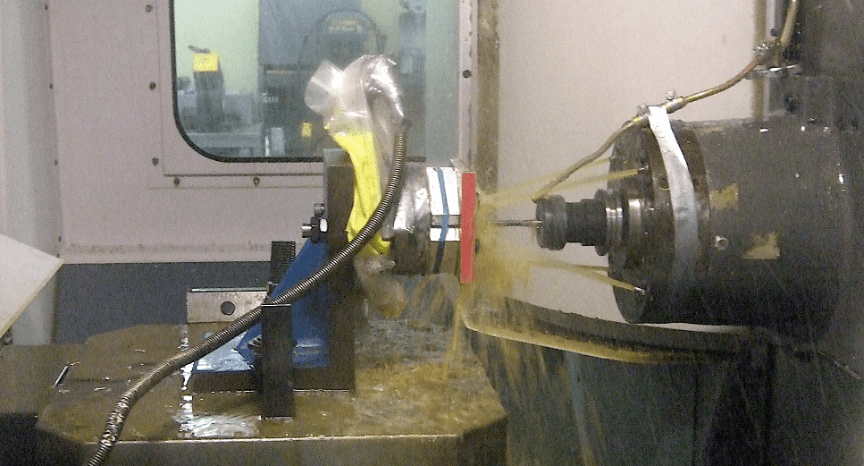
Torque is the torsional or twisting load, and a tap is a tool that cuts or forms a screw thread in a drilled hole. The tapping torque test is a standard test for assessing the effectiveness of metalworking lubricants. You measure the torque required to tap a standard hole under standard conditions, and the lower the torque, the better the lubricant. There are various problems with this test, mainly due to the geometric complexity and inherent dimensional variability of taps, but the professors there weren’t looking for a technical critique of a standard test accepted as valid by the grant agency. So I just ran the plan and reported the numbers, without adding a bunch of footnotes about how the test sucked. We were comparing standard water-based coolant, oil mist lubrication, and an early version of the high-pressure gas lubrication system featured on the Pulsebeat 04 cover and discussed in the Pulsebeat 08 Editor’s Note. The project was sponsored by the National Science Foundation.
We secured the lubricant nozzles to the spindle using silver engineering tape. I don’t need to sing the praises of this widely admired miracle product. Although originally developed for advanced engineering work, it has trickled down to the heating and cooling industry, and is often mistakenly referred to as “duct tape” by laypeople. The respectful name is “silver engineering tape.” Be sure to correct your friends.
The reading period for Pulsebeat 14, which will be posted in May, begins February 1. Until May, enjoy the wonderful poems in this issue.
 Pulsebeat Poetry Journal